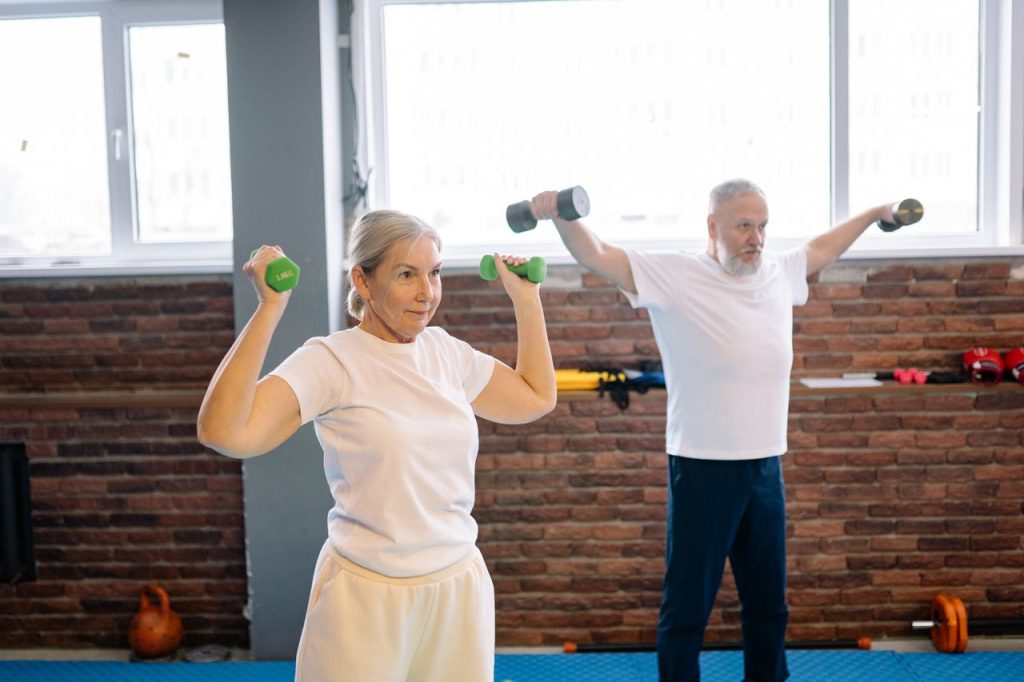

Yes, strength training can help you age better after 50 by supporting the strength and physical capacity you need for everyday life. Getting older does not mean you must stop improving your fitness. Whether you want to carry groceries comfortably, climb stairs with more confidence, enjoy gardening, or keep up with family activities, building strength can be a practical investment in your future.
The benefits extend beyond how your muscles look. Strength training gives you a way to practice movements, gradually increase what you can handle, and maintain skills that matter outside the gym. NIH guidance highlights stronger muscles, support for bone health, and improved ability to perform daily activities among its benefits. NIH News in Health
You do not need to become a bodybuilder or begin with heavy weights. A useful starting point may involve standing from a chair, pushing against a wall, or using a light resistance band. Your starting level should reflect your current abilities, health, and experience rather than assumptions about what someone your age should do.
This article explains why strength training matters after 50, what a sensible beginner program can look like, how to progress, and how to make exercise fit your life. The goal is to help you approach training with realistic expectations and a plan you can sustain.
Key Takeaways
- Strength training can support everyday abilities such as standing, lifting, carrying, and climbing stairs.
- Adults should include muscle-strengthening activities on at least two days each week, alongside aerobic activity.
- People 65 and older should also include balance activities in their weekly routine.
- Bodyweight exercises, bands, free weights, and machines can all provide resistance.
- A manageable starting routine is more useful than a demanding plan you cannot repeat.
- Progress should come through controlled practice and gradual changes in resistance, repetitions, or difficulty.
- Training needs to account for symptoms, existing conditions, recovery, and personal goals.
- Better daily function is a meaningful measure of success, even when appearance or body weight changes little.

Why Strength Matters After 50
Muscle Function Helps You Stay Independent
Muscle strength contributes to ordinary movements that are easy to take for granted. Rising from a low seat, opening a heavy door, carrying laundry, and stepping onto a curb all require your body to produce and control force.
NIH notes that age-related muscle loss can affect the ability to function at home and live independently. Maintaining strength becomes increasingly important as people grow older. NIH News in Health
Consider what independence means in your own life. It might mean managing household tasks without asking for help, continuing to travel, or staying comfortable in a home with stairs. These priorities can guide your exercise choices more clearly than a general goal to “get fit.”
Write down two or three activities you want to keep doing. Use them as reference points when planning your routine and assessing whether it is helping.
Your Starting Point Is Individual
Two people in their fifties can have very different exercise needs. One may already hike regularly and lift weights. Another may be returning to activity after illness, caregiving responsibilities, or years of desk work.
A routine should reflect that difference. Beginning with support, lighter resistance, or fewer exercises is a reasonable choice when you need it. Someone with more experience may need a greater challenge, but experience does not remove the need to pay attention to current symptoms and recovery.
Avoid using your age as the only basis for choosing exercises. Your present ability to perform a movement comfortably and consistently is a more useful starting point.
What Counts As Strength Training?
Resistance Can Come From Different Sources
Strength training means making muscles work against resistance. That resistance can come from your body weight, a band, a dumbbell, or a machine. The equipment is a tool; the movement and the challenge it provides are what matter.
Examples include standing from a chair, performing a wall push-up, pulling a resistance band toward your body, or using a leg press machine. Each can be adjusted to match different levels of strength and experience.
Choose an option you can use reliably. If a nearby gym is convenient and you enjoy going, machines or free weights may fit well. If travel makes attendance difficult, a home routine may be easier to maintain. Neither setting automatically produces better results for every person.
Everyday Activity And Planned Training Serve Different Purposes
Being active around the house is valuable, but it can be difficult to know whether those activities provide a consistent strength challenge. Some days may involve lifting and carrying; others may involve very little physical effort.
A planned routine makes the work easier to track. You know which exercises you performed, how much resistance you used, and whether the movements are becoming more manageable.
You can keep walking, gardening, and doing other activities you enjoy while adding structured strength sessions. There is no need to replace an enjoyable routine with a completely different lifestyle.
How Strength Training Can Support Healthy Aging
It Can Make Daily Tasks More Manageable
One practical reason to train is to make routine tasks feel less demanding. For example, you might practice a controlled chair stand because getting up from a sofa has become difficult. You might include a light carrying exercise because moving shopping bags is a priority.
These examples give your training a purpose. You are practicing a movement related to something you want to do more comfortably, then adjusting the challenge as your ability changes.
Progress may show up as fewer pauses, better control, or greater confidence rather than a dramatic change in appearance. Notice those changes. They can help you decide whether your routine is meeting your goals.
It Supports Bone Health
Resistance exercise places forces on bones as muscles work. The National Institute of Arthritis and Musculoskeletal and Skin Diseases identifies resistance training, weight-bearing exercise, and balance training as useful components of an approach to bone health. Exercise selection matters, especially for people with low bone density or osteoporosis. NIAMS
If you have osteoporosis or a previous fracture, ask a qualified clinician which movements are appropriate before following a general routine. A program suitable for one person may need substantial changes for another.
Avoid treating bone health as a reason to attempt the heaviest exercise you can find. A suitable, progressive plan is more useful than an exercise selected only because it looks challenging.
It Can Be Part Of A Broader Health Routine
NIH describes potential metabolic benefits of strength training and an association with lower risk of cardiovascular and other chronic diseases. Those benefits should be understood as part of a broader health picture, rather than a promise that lifting weights will prevent a particular illness. NIH News in Health
Use strength training alongside other habits and any care you already receive. Continue prescribed treatment, attend recommended appointments, and discuss exercise adjustments when a health condition affects your activity.
A sustainable routine can be valuable without becoming the solution to every health concern. Keep the goals specific enough that you can assess them honestly.
How Often Should You Train After 50?
Start With A Repeatable Weekly Schedule
CDC guidance recommends muscle-strengthening activity on at least two days each week for adults, working all major muscle groups. It also recommends at least 150 minutes of moderate-intensity aerobic activity, 75 minutes of vigorous activity, or an equivalent combination each week. These are targets to build toward, rather than a requirement to accomplish everything immediately. CDC
A practical beginner schedule might place strength sessions on Monday and Thursday. Keeping a day or more between full-body sessions gives you time to assess how you feel before repeating the work.
Choose times that usually remain available. A short morning session may fit better than an evening workout if family or work commitments frequently change your plans.
Keep The First Sessions Manageable
You do not need a long workout to establish a routine. Begin with enough time to warm up, practice a few movements, and finish without rushing.
For some beginners, approximately 20 to 30 minutes may be a workable starting window. This is a planning example, not a prescribed duration. Someone who needs longer rests may take more time; someone beginning with only a few exercises may take less.
The first aim is to learn what you can repeat comfortably. Add more work when the current routine is manageable, and your recovery allows it.
A Beginner Strength Routine After 50
The following exercises illustrate how a simple routine could be organized. They are options to adapt, not a prescription for every reader. If you have an injury, significant balance difficulty, a recent operation, or a condition that affects exercise, get individual guidance before using the routine.
Chair Stands For Lower-Body Practice
Use a stable chair that will not slide. Start seated with your feet positioned comfortably on the floor. Lean forward as needed, stand up under control, then return to sitting without dropping into the seat.
Use your hands for assistance if you need them. A higher seat can also make the movement easier. Begin with a small number of controlled repetitions rather than continuing until you struggle to stand.
To make the exercise more challenging later, you might reduce hand assistance or add repetitions. Change only what you can control safely.
Wall Push-Ups For Upper-Body Practice
Stand facing a wall and place your hands at a comfortable height. Bend your elbows to bring your body toward the wall, then press back to the starting position.
Begin close enough to the wall that you can move smoothly. Keep your body controlled rather than letting your hips sag or your shoulders shrug. Choose a range of movement that feels comfortable.
When this becomes easy, a qualified trainer can help you choose a more challenging variation, such as using an appropriate fixed surface at a lower height.
Rows For Pulling Practice
A row involves pulling resistance toward your body. A seated row machine or a resistance band can provide options, depending on your setup and experience.
If using a band, follow its instructions for anchoring and inspect it for damage. Do not attach it to furniture or a door arrangement that could come loose. Use a controlled pull and return rather than snapping the band back.
If the setup feels uncertain, choose a different exercise or ask for help. Convenience should not depend on an improvised attachment you cannot trust.
Supported Calf Raises
Stand near a stable support, such as a fixed counter. With your feet positioned comfortably, raise your heels, pause briefly if you can do so steadily, and lower them under control.
Keep support available throughout the exercise. The aim is to practice the movement comfortably, so there is no need to remove your hand support to make the exercise look more advanced.
If standing is difficult, ask a clinician or trainer about an appropriate seated alternative and whether it fits your goals.
Light Carries When Appropriate
A carrying exercise can be a simple way to practice moving with a load. Choose a light weight, a clear path, and a distance that allows you to stay upright and controlled.
Avoid carrying a weight that pulls you noticeably to one side or makes you rush. If balance is uncertain, a stationary or seated exercise may be a better choice until you have individual guidance.
Put the weight down safely at the end. How you pick up and set down equipment is part of the exercise, so do not overlook those steps.
How To Choose The Right Challenge
Begin With Movement You Can Control
The right starting challenge lets you perform the exercise without rushing, jerking, or losing your position. You should be able to explain what you are practicing and recognize when your technique starts to change.
For a cautious first session, you might try one short set of several repetitions of each selected exercise. If you are comfortable and recover well, build gradually. There is no requirement to reach a particular repetition count during your first workout.
Keep a few comfortable repetitions in reserve while you learn. Stopping before you struggle gives you a chance to practice good movement and assess how the exercise feels afterward.
Increase One Thing At A Time
Once an exercise feels consistently manageable, choose one small adjustment. You could add a repetition, use slightly more resistance, or select a modestly harder variation.
For example, if chair stands become easy with hand assistance, you might try using less help before adding a weight. If a light dumbbell exercise becomes easy, you might increase the resistance while keeping the rest of the session similar.
Changing several things at once makes it harder to identify what caused excessive fatigue or discomfort. A small, trackable change gives you clearer feedback.
Repeat Successful Sessions
You do not need to make every workout harder. Repeating the same routine can help you become more familiar with the movements and confirm that the current workload is appropriate.
Progress is not a test you must pass each week. Busy periods, disrupted sleep, and changing health can all affect what is manageable. Adjusting a session is a practical decision, not a failure.
Record enough information to guide the next workout: the exercise, resistance, repetitions, and any symptoms. A brief note is usually sufficient.

How To Train More Safely
Prepare Your Space And Equipment
Before starting, check the exercise area. Move loose rugs, clear walking paths, and put equipment where you can reach it without awkward stretching or stepping over objects.
Use a stable chair and suitable support for standing movements. Inspect bands and understand how equipment adjusts before applying resistance. If you train at a gym, ask staff to show you unfamiliar machine settings.
A few minutes of preparation can also make the session easier to repeat. Keep your routine and equipment organized so that getting started requires fewer decisions.
Breathe And Move Steadily
NIH safety guidance advises smooth movements, gradual increases in weight, and avoiding breath-holding during strength exercises. A simple approach is to breathe out during the harder part of a movement and breathe in during the return. NIH News in Health
If you cannot maintain comfortable breathing or controlled movement, reduce the challenge or rest. You do not need to rush between exercises to make the session worthwhile.
Ask for instruction when a movement remains confusing. A clear demonstration and feedback may be more helpful than repeatedly guessing from a written description.
Respond To Symptoms
Stop an exercise that causes sharp pain, sudden weakness, or an alarming change in how you feel. Persistent joint pain or symptoms that affect ordinary activities deserve assessment rather than repeated attempts to push through them.
Stop exercising and seek urgent medical help for chest pain, fainting, or severe unexplained breathlessness. Resume training only when it is appropriate to do so.
If you are returning after illness or an extended break, reconsider the starting workload. Previous ability is useful context, but it does not automatically describe what is suitable today.
Make Strength Training Part Of A Balanced Routine
Continue Aerobic Activity
Keep activities such as walking, cycling, or swimming in your week when they are appropriate for you. Strength sessions and aerobic activity address different parts of a balanced exercise routine.
You can organize them around your preferences. One person may enjoy walking on days between strength sessions. Another may prefer a brief walk and a short workout on the same day.
Start with a schedule you can maintain. If adding strength work makes your week feel overloaded, reduce the initial session length or simplify the exercises rather than abandoning the whole plan.
Include Balance Practice As You Get Older
CDC recommends aerobic, muscle-strengthening, and balance activities for adults 65 and older. Strength training alone should not be assumed to meet every balance need. CDC
Balance practice should match your ability and surroundings. Keep a stable support nearby, and get individual guidance if you have fallen recently or feel unsteady during ordinary walking.
Avoid making balance exercises harder by closing your eyes or standing on an unstable object without appropriate instruction. The useful challenge is the one you can practice safely and consistently.
Support Your Routine With Recovery And Practical Habits
Give Yourself Time Between Demanding Sessions
Plan recovery into the week instead of treating it as time lost. After a new session, notice how you feel later that day and during ordinary activities the next day.
If you feel unusually depleted or your symptoms worsen, reduce the next workload and consider whether you need professional advice. You can still keep a routine by doing less while you reassess.
Avoid judging a workout by how sore it makes you. Soreness does not tell you whether an exercise was the best choice for your goals.
Keep Meals And Sleep In The Plan
Try to avoid scheduling workouts in ways that regularly displace meals or sleep. A routine that fits alongside basic daily needs is easier to maintain than one that competes with them.
If you are unsure how much to eat, have unintentional weight loss, or follow a medically restricted diet, ask a clinician or registered dietitian for advice. General exercise articles cannot determine individual nutrition needs.
Prepare simple logistics: decide when you will exercise, where you will train, and what you need afterward. These details can make consistency easier than relying on motivation alone.
Common Mistakes To Avoid
Doing Too Much During The First Week
Enthusiasm can make a demanding start tempting. Choosing too many unfamiliar exercises, increasing resistance rapidly, or adding daily workouts may leave you with a routine you cannot comfortably repeat.
Start with a small program and learn from your response. You can add complexity later if it serves a clear purpose.
Comparing Yourself With Others
Another person’s weights or exercise choices do not tell you what is right for you. Their training history, health, and goals may be very different.
Compare your current performance with your own earlier sessions. Look for better control, more consistent attendance, and improvements in the activities that matter to you.
Following A Plan Without Adjusting It
A written program is a guide, not a reason to ignore new symptoms or changed circumstances. Modify it when an exercise is unsuitable, equipment is unavailable, or recovery is poor.
Keep the purpose of each exercise in mind. If a movement repeatedly causes problems, ask about an alternative that addresses the same goal.
How To Measure Progress
Track Training And Everyday Function
Keep a simple record of sessions completed, exercises performed, and the resistance or assistance used. Add a brief note about how you felt.
Alongside workout numbers, track one or two ordinary tasks. You might notice whether getting up from a familiar chair is easier or whether carrying a manageable shopping bag feels more comfortable.
Use the same conditions when possible. A different chair height or a heavier bag can change the task, making comparison less useful.
Expect An Individual Timeline
There is no universal deadline for seeing results. Your starting point, consistency, program, health, and interruptions all influence progress.
Give yourself time to learn the routine before judging it. If you are attending regularly but making no useful progress, review the exercises and workload with a qualified professional.
Choose goals you can act on immediately, such as completing two suitable sessions this week. Performance goals can develop as you learn more about your abilities.

Conclusion
Strength training can help you age better after 50 by giving you a structured way to develop and maintain strength for the life you want to lead. Its value can be as practical as standing more comfortably, carrying everyday items with greater confidence, or continuing activities that matter to you.
Begin with a manageable routine, choose movements suited to your abilities, and increase the challenge gradually. Include aerobic activity and appropriate balance practice, and seek individual advice when a condition or symptom affects exercise.
You do not need an impressive first workout. You need a useful starting point and a routine you can return to. Consistent, thoughtful practice makes strength training a realistic part of healthy aging.
Frequently Asked Questions
1. Is 50 Too Old To Start Strength Training?
No. Being over 50 does not automatically prevent you from learning resistance exercises. Choose a starting level that reflects your present ability and health. If you have never trained, need help with movement, or have a condition affecting exercise, get guidance before beginning.
2. How Many Days A Week Should I Train?
Adults should aim to include muscle-strengthening activity on at least two days each week. A beginner might schedule two full-body sessions with time between them. Build toward a suitable routine gradually rather than assuming you must meet the full target immediately.
3. Do I Need Heavy Weights?
You need an appropriate challenge, which may initially come from your body weight or light equipment. Begin with resistance you can control. As exercises become consistently manageable, consider a small increase in difficulty rather than using the same easy workload indefinitely.
4. Can I Train At Home?
Yes, provided the exercises and setup are suitable. A stable chair, a clear area, and appropriate equipment can support a simple routine. Inspect bands and follow anchoring instructions. Ask for a demonstration if you are unsure how to perform a movement.
5. Is Walking Enough To Replace Strength Training?
Walking is a useful aerobic activity, but a balanced routine also includes muscle-strengthening work. You can continue walking while adding resistance exercises. The two activities can fit into the same week without requiring lengthy workouts every day.
6. What If I Have Joint Pain?
Do not force a movement that causes sharp or worsening pain. Exercise selection, range of movement, and resistance may need adjustment. Persistent symptoms should be assessed by a qualified clinician who can help determine what is appropriate for you.
7. Can I Strength Train With Osteoporosis?
A suitable exercise program can include resistance training, but osteoporosis requires attention to movement selection and fracture risk. Ask your healthcare provider or physical therapist for an individual plan. Do not assume every exercise in a general beginner routine is suitable.
8. Should I Be Sore After Every Workout?
No. Soreness is not a goal or a reliable measure of progress. Focus on controlled exercise, manageable recovery, and improvements over time. Reduce the workload and seek advice when pain is persistent, severe, or interferes with ordinary activities.
9. How Quickly Will I Notice Improvement?
The timeline varies. Early progress may involve learning the exercises or attending more consistently. Changes in strength and daily function need repeated practice. If your routine is consistent but does not seem useful, review it with a qualified trainer or clinician.
10. What Is The Best First Step?
Identify an activity you want to maintain or improve, then choose a small starting routine that supports that goal. Schedule your first sessions and keep simple notes. Get individual guidance if health conditions, symptoms, or uncertainty about technique affect your plan.
Support Healthy Aging With A Personal Trainer For Seniors At Fitness Ellipsis!
Healthy aging is about staying strong, mobile, confident, and independent as you get older. At Fitness Ellipsis, our Personal Trainer for Seniors program offers personalized one-on-one coaching designed to support your health, fitness level, abilities, and long-term goals. Each workout is tailored to help you maintain strength, improve balance, support mobility, and stay active in everyday life.
Whether you want to enjoy your favorite hobbies, travel with greater confidence, stay steady on your feet, or make daily activities easier, our experienced trainers can create a fitness plan that works for you. Sessions focus on safe, practical exercises that support strength, flexibility, coordination, endurance, and overall wellness while keeping your individual needs and comfort in mind.
Healthy aging doesn’t mean slowing down—it means staying capable and making the most of every stage of life. With personalized coaching from Fitness Ellipsis, you’ll have a dedicated trainer to help you stay consistent, work toward your goals, and maintain an active lifestyle at a comfortable pace. Get started today and discover how personal training for seniors can support your healthy aging journey and help you stay active, strong, and independent.