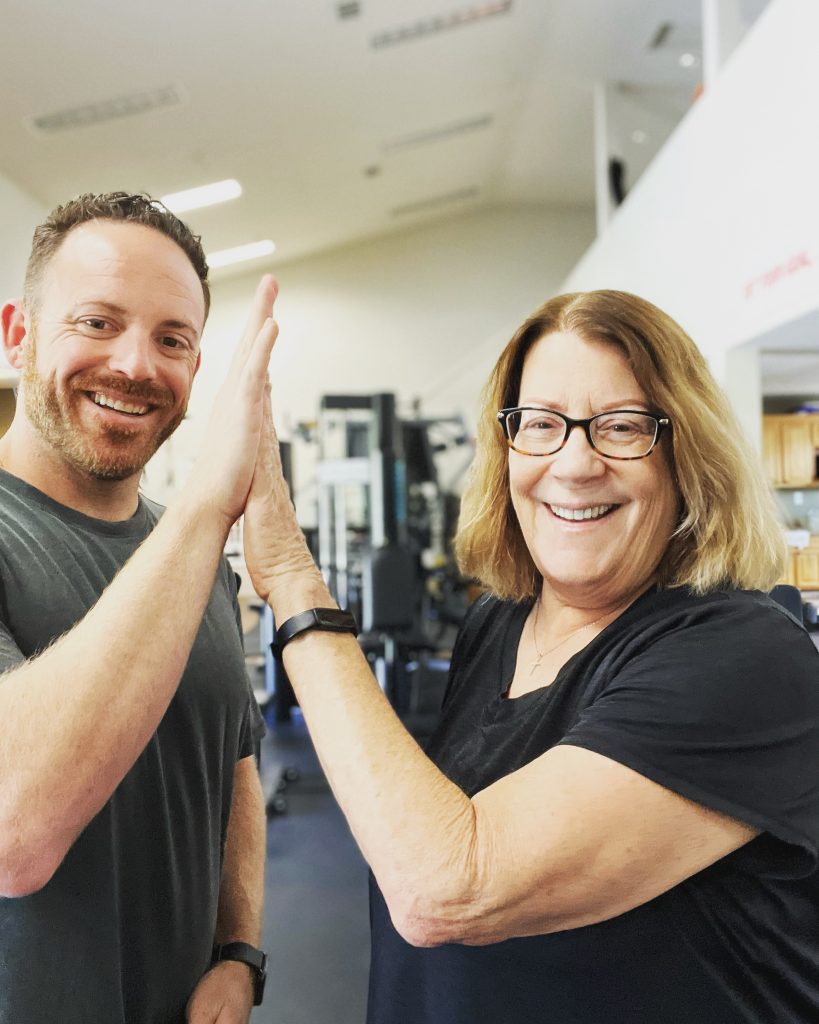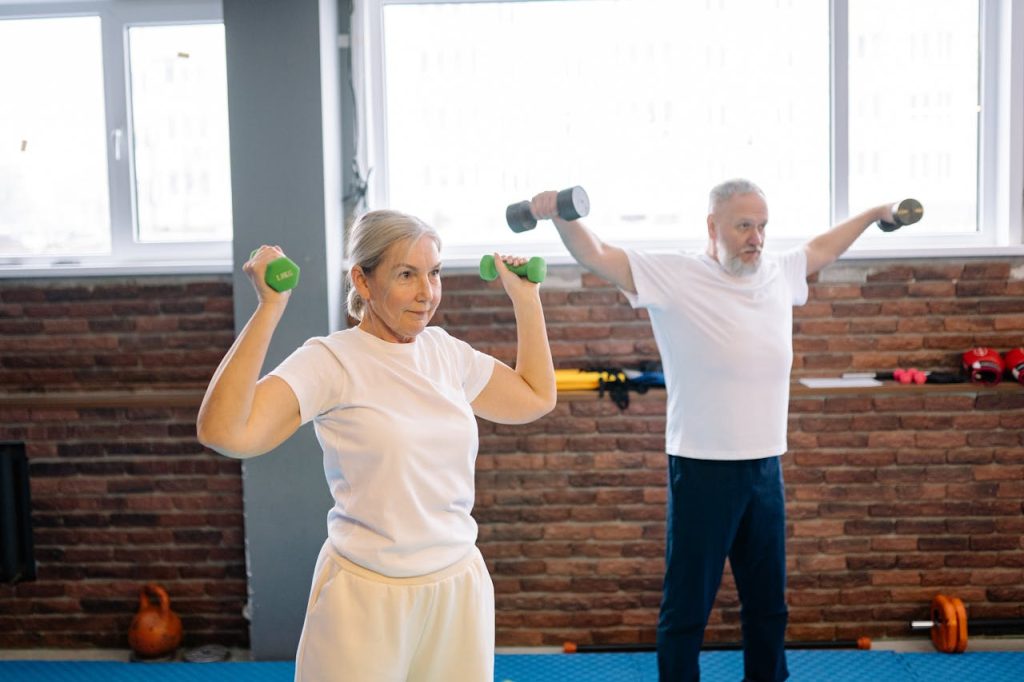

The ability to walk steadily, rise from a chair, climb stairs, carry groceries, and move confidently through the community can have an enormous influence on quality of life. These abilities depend on more than muscle strength alone. They also require balance, coordination, mobility, endurance, reaction time, and confidence.
As people grow older, changes in activity levels, health, muscle mass, joint mobility, vision, and nervous-system function may make certain movements more difficult. An illness, injury, hospital stay, or extended period of inactivity can accelerate these changes. When movement begins to feel uncertain, some older adults respond by becoming less active. Unfortunately, avoiding activity can lead to further loss of strength and confidence.
Senior fitness training helps interrupt that cycle. It uses appropriately selected exercises to improve the physical abilities needed for daily life. A well-designed program may include resistance training, balance drills, aerobic exercise, mobility work, coordination practice, and functional movements such as stepping, reaching, lifting, carrying, and standing from a chair.
The purpose is not to force every older adult into the same routine. Senior fitness training should be individualized according to the participant’s current abilities, medical considerations, previous experience, and goals. One person may want to walk without holding onto furniture. Another may want to continue hiking, traveling, playing tennis, or caring for grandchildren.
The Centers for Disease Control and Prevention recommends that adults 65 and older include aerobic, muscle-strengthening, and balance activities in their weekly routines. When the general recommendations cannot be met, older adults are encouraged to be as active as their abilities and health conditions allow.
This article explains how senior fitness training can improve balance, strength, and confidence, how these benefits reinforce one another, and what older adults should consider when beginning a program.
Key Takeaways
- Senior fitness training uses strength, balance, mobility, cardiovascular, coordination, and functional exercises adapted to an older adult’s abilities.
- Strength training helps maintain the muscular capacity needed for standing, walking, climbing stairs, lifting, carrying, and recovering from a loss of balance.
- Balance training develops postural control, body awareness, weight shifting, stepping ability, and stability during everyday movements.
- Confidence often improves when participants practice difficult movements in a safe, progressive environment and experience measurable success.
- Strength, balance, and confidence are closely connected. Improvement in one area can support progress in the others.
- Training should be challenging enough to promote adaptation but appropriate for the person’s health, experience, and current function.
- Functional exercises help transfer improvements from the training environment to daily activities.
- Consistency is generally more important than beginning with long or difficult workouts.
- Older adults with recent falls, unexplained dizziness, unstable medical conditions, or significant pain may need evaluation from a healthcare professional.
- Fitness training supports general physical capacity, but it does not replace medical treatment or rehabilitation when clinical care is needed.
Why Balance, Strength, And Confidence Matter As We Age
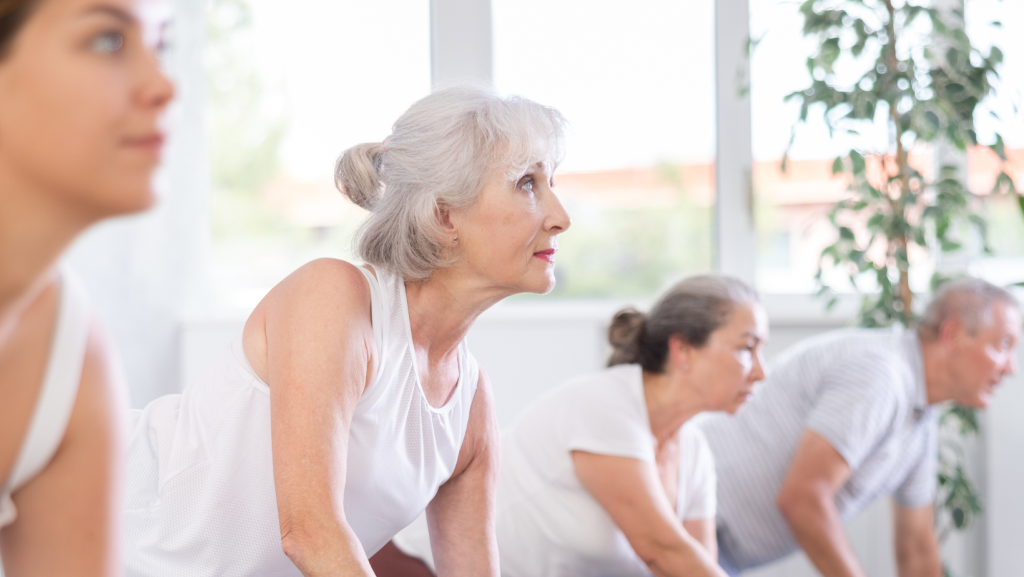
Balance, strength, and confidence influence nearly every form of physical independence. Although they are often discussed separately, they work together during most daily activities.
Standing from a chair requires leg and hip strength, forward weight shifting, trunk control, and confidence that the body can complete the movement. Walking down stairs requires strength, balance, coordination, depth perception, and the willingness to transfer weight onto one leg. Carrying groceries requires grip strength, posture, endurance, and stability while the body manages an uneven load.
If one component declines, the task may become harder. If several decline at the same time, a person may begin avoiding the task entirely.
The Cycle Of Inactivity
A common pattern begins when movement becomes uncomfortable or uncertain. The person walks less, avoids stairs, stops participating in recreational activities, or relies more heavily on furniture and other people for support.
Reduced activity can contribute to:
- Loss of muscle strength
- Reduced endurance
- Decreased joint mobility
- Slower reactions
- Less opportunity to practice balance
- Increased fear of difficult movements
- Greater dependence during daily tasks
The more activity is avoided, the less prepared the body may become for activity. Senior fitness training can provide a structured and gradual way to rebuild capacity.
Maintaining A Physical Reserve
Daily life becomes easier when ordinary tasks require only a portion of a person’s maximum ability. If standing from a chair requires nearly all available leg strength, the task may feel exhausting or unsafe. If training increases strength, the same chair transfer may require much less effort.
This extra capacity is sometimes thought of as a physical reserve. It can help a person respond to unexpected challenges, such as catching balance after a misstep, carrying an unfamiliar load, navigating an airport, or recovering after a period of illness.
How Senior Fitness Training Improves Strength
Strength is the ability of muscles to produce force. It is essential for posture, movement, balance, recovery, joint support, and everyday function.
Senior strength training uses progressive resistance. This means the muscles are challenged at an appropriate level, and the challenge gradually increases as the participant adapts.
Resistance may come from:
- Body weight
- Resistance bands
- Dumbbells
- Kettlebells
- Weight machines
- Cable machines
- Medicine balls
- Household objects
- Water resistance
- Manual resistance
- Weighted carrying exercises
The equipment matters less than whether the exercise safely and effectively challenges the intended movement.
Strength Training Challenges The Muscles To Adapt
Muscles respond to demands placed on them. If the resistance is always far below a person’s ability, the exercise may become too easy to encourage continued improvement. If resistance is excessive, technique may deteriorate, and the risk of injury or discouragement may rise.
An effective program finds an appropriate middle ground. The last repetitions of a set may feel challenging, but the participant should usually be able to maintain control and proper technique.
Progression may involve increasing resistance, repetitions, sets, range of motion, or movement complexity. It may also involve reducing reliance on hand support or performing the same task with better control.
Strength Progress Is Not Limited To Heavier Weights
An older adult can become stronger without constantly adding large amounts of weight. Progress may appear as:
- Standing from a chair without using the arms
- Climbing stairs more comfortably
- Carrying groceries with less fatigue
- Using a fuller range of motion
- Completing more repetitions
- Controlling the lowering phase of an exercise
- Maintaining better posture
- Moving with less assistance
- Recovering more quickly between activities
These improvements may be more meaningful than the number printed on a weight.
Lower-Body Strength Supports Mobility
The muscles of the legs and hips help people stand, walk, climb, step over objects, and respond to changes in balance.
Senior fitness programs commonly include:
- Sit-to-stand exercises
- Squats to a chair or bench
- Step-ups
- Supported lunges
- Leg presses
- Calf raises
- Hip-hinge movements
- Hamstring exercises
- Hip-abduction exercises
- Glute bridges
Each movement can be modified. A beginner may stand from a higher chair while using the armrests. A more experienced participant may use a lower seat, add resistance, or perform a controlled squat without touching the chair.
The Importance Of Controlled Lowering
Lowering the body into a chair or stepping down from a curb requires muscles to control force while lengthening. This type of strength is important for smooth, safe movement.
Training should therefore include both lifting and controlled lowering. A participant who can stand from a chair but drops quickly when sitting may benefit from practicing a slower descent.
Upper-Body Strength Supports Independence
Upper-body strength contributes to many daily tasks, including:
- Opening doors
- Pushing a shopping cart
- Carrying bags
- Reaching into cabinets
- Moving household objects
- Using mobility aids
- Getting up from the floor
- Performing personal-care activities
Exercises such as rows, chest presses, wall push-ups, overhead presses, arm curls, triceps extensions, and loaded carries may be used when appropriate.
The trainer should select movements based on shoulder comfort, joint mobility, posture, and the participant’s goals.
Core Strength Improves Movement Control
The core includes muscles that help stabilize and move the trunk and pelvis. These muscles work during standing, walking, reaching, lifting, carrying, and changing direction.
Senior core training does not have to involve floor-based abdominal exercises. It may include:
- Standing resistance-band presses
- Seated or standing marching
- Controlled carrying exercises
- Supported bird-dog variations
- Modified bridges
- Anti-rotation exercises
- Posture and breathing exercises
- Controlled reaching
- Hip-hinge practice
The most suitable exercises are those the participant can perform with good control and without inappropriate strain.
Strength Training Can Make Daily Tasks Feel Easier
One of the greatest benefits of strength training is that it can reduce the relative effort required for everyday movement.
Imagine that standing from a chair requires nearly all of someone’s available leg strength. After a period of consistent training, the same task may require a much smaller percentage of that person’s capacity. The chair has not changed, but the person’s ability has.
This can make daily activities feel less tiring and may encourage greater participation in walking, social events, recreation, and household tasks.
How Senior Fitness Training Improves Balance
Balance is the ability to control the body’s position while standing still or moving. It depends on several systems working together.
The brain receives information from vision, the inner ear, and sensory receptors in muscles, joints, and the feet. It uses that information to coordinate muscular responses that maintain stability.
Balance can be affected by:
- Reduced muscle strength
- Changes in vision
- Inner-ear conditions
- Reduced foot sensation
- Joint stiffness
- Slower reactions
- Certain medications
- Pain
- Neurological conditions
- Fear of falling
- Limited physical activity
Because balance is multifaceted, training should involve more than simply standing on one leg.
Static Balance Training
Static balance involves maintaining a position without taking a step. Exercises may include:
- Standing with the feet closer together
- Semi-tandem standing
- Heel-to-toe standing
- Supported single-leg standing
- Holding a stable posture while turning the head
- Standing while reaching within a safe distance
The trainer can change the difficulty by adjusting foot position, hand support, visual focus, surface, or duration.
Safety should remain the priority. Participants should have a stable support within reach, and exercises should not be made unstable merely for the sake of appearing advanced.
Dynamic Balance Training
Dynamic balance is the ability to remain controlled while moving. It is closely connected to real-life situations.
Exercises may include:
- Walking at different speeds
- Changing direction
- Side stepping
- Backward stepping
- Walking around obstacles
- Stepping over low objects
- Practicing controlled turns
- Reaching while standing
- Starting and stopping on command
- Carrying a light object while walking
These exercises can help participants manage environments that are less predictable than a flat, empty room.
Why Directional Movement Matters
Daily life does not occur only in a straight line. People step sideways to move around furniture, turn to respond to someone, back away from a counter, and change direction in crowded spaces.
Practicing these patterns may improve coordination and help the participant feel more comfortable performing them outside the training environment.
Weight-Shifting Skills
Walking requires repeated weight transfer from one leg to the other. Reaching into a cabinet or picking up an object also shifts the body’s center of mass.
A senior fitness program may practice forward, backward, and sideways weight shifts. Early exercises may be small and performed with hand support. Later exercises may involve stepping, reaching, or catching a light object.
Learning to shift weight with control can improve movement efficiency and confidence.
Stepping And Balance Recovery
People cannot prevent every loss of balance. Sometimes safety depends on taking a quick, well-placed step.
Training may include controlled stepping in several directions, responding to a cue, or recovering from a small voluntary weight shift. These exercises should be introduced carefully, particularly for participants with a fall history.
A fitness trainer should not create sudden or forceful disturbances that the participant is unprepared to manage. More advanced reactive-balance training may require specialized expertise and safety equipment.
Strength And Balance Reinforce Each Other
Balance is not only a sensory or neurological skill. It also depends on the body’s ability to produce enough force to control movement.
Leg and hip strength help a person correct a sway, climb a step, or rise from a low position. Ankle strength contributes to control during standing. Core and upper-body strength can help stabilize the body while reaching or carrying.
This is why a complete balance program often includes resistance training. Practicing balance without developing the muscles needed to act on that balance information may limit progress.
How Senior Fitness Training Builds Confidence
Confidence is a person’s belief that they can perform a task or manage a situation. In senior fitness, confidence may involve trusting the body to stand, walk, turn, climb, lift, or participate in an activity.
Confidence is not created only by encouragement. It grows from successful experiences, improved physical ability, clear information, and repeated practice.
Gradual Success Changes Expectations
Someone who has struggled with stairs may expect every staircase to be difficult. Someone who has fallen may anticipate another fall whenever the ground feels uneven.
A progressive fitness program breaks a large challenge into smaller steps. The participant may first practice standing from a raised chair, then from a standard chair, and eventually with added resistance. Each successful stage provides evidence that improvement is possible.
This evidence can be more powerful than reassurance alone.
Mastery Builds Self-Belief
Completing an exercise independently can change how a participant views their abilities. Small achievements may include:
- Performing an extra repetition
- Walking for two additional minutes
- Using less hand support
- Lifting a slightly heavier object
- Completing a step-up safely
- Recovering balance without assistance
- Learning a new movement
- Returning to a valued activity
A trainer should recognize these achievements without exaggerating them. Honest feedback helps participants understand what has improved and what still needs work.
A Controlled Environment Reduces Fear
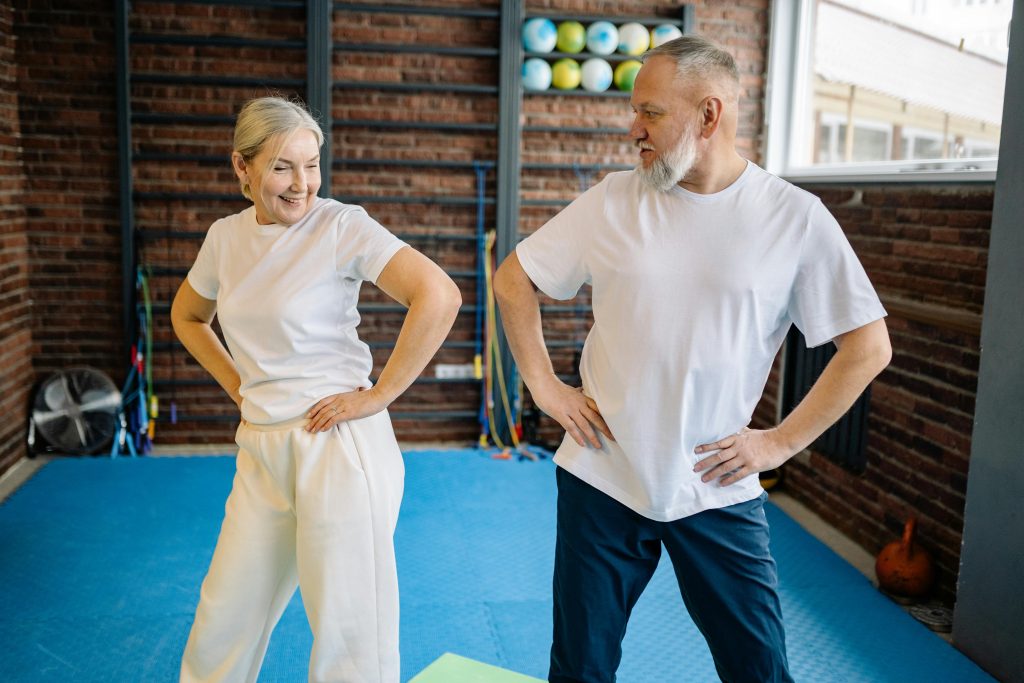
Fear often grows when movement feels unpredictable. A structured training environment creates clear expectations.
The participant knows:
- What exercise will be performed
- Where support is available
- How many repetitions are planned
- What discomfort should be reported
- How the exercise can be modified
- That the trainer is paying attention
This structure allows the person to practice movements that may otherwise be avoided.
Education Improves Confidence
People are more likely to feel confident when they understand what they are doing.
A trainer can explain:
- Why an exercise was selected
- Which muscles or skills it develops
- How it relates to daily life
- What appropriate effort feels like
- How to adjust the exercise
- What warning signs should not be ignored
- How progress will be measured
Education gives the participant a more active role in the program rather than making them dependent on constant instruction.
Confidence Encourages More Activity
When people feel stronger and steadier, they may become more willing to walk, attend social events, travel, shop, garden, or participate in recreation.
Increased participation provides additional opportunities to practice movement and build endurance. This can create a positive cycle:
- Training improves physical capacity.
- Improved capacity makes movements feel more manageable.
- Greater confidence encourages additional activity.
- Additional activity reinforces strength, balance, and endurance.
This does not mean fear disappears immediately. Confidence often develops gradually and may vary by environment.
The Relationship Between Fear Of Falling And Physical Ability
Fear of falling deserves careful attention. Some caution is reasonable, especially after an injury. The problem arises when fear becomes so broad that a person avoids most activity.
Avoidance may cause the body to become less prepared for movement, potentially increasing the difficulty of future activity.
Senior fitness training can address this through:
- Safe strength development
- Supported balance practice
- Gradual exposure to challenging movements
- Education about environmental hazards
- Improved stepping ability
- Clear progress tracking
- Appropriate referrals when medical assessment is needed
People with repeated falls, dizziness, fainting, sudden weakness, or a major change in walking should be evaluated by a healthcare professional before relying on general fitness training.
Functional Training Connects Exercise To Everyday Life
Fitness improvements are most meaningful when they transfer to real activities. Functional training uses movements that resemble the physical demands of daily life.
Sit-To-Stand Training
Standing from a chair requires leg strength, forward trunk movement, foot positioning, balance, and coordination.
A trainer may begin with a raised chair or allow the participant to use the armrests. Progressions may include:
- Using less hand assistance
- Lowering the seat height
- Slowing the descent
- Holding a light weight
- Performing additional repetitions
- Varying foot position when appropriate
This one movement can build both strength and confidence because the participant encounters it many times each day.
Stair And Step Training
Step-ups can prepare participants for stairs, curbs, vehicles, and changes in floor level.
Training may begin with a low platform and stable hand support. The participant can gradually increase step height, repetitions, or resistance as ability improves.
Control while stepping down is especially important. Descending requires strength, balance, depth judgment, and confidence.
Carrying And Lifting
Carrying exercises can prepare older adults for groceries, laundry, luggage, gardening supplies, and household objects.
The trainer may vary:
- The weight
- The carrying distance
- Whether the load is held on one or both sides
- The shape of the object
- The walking surface
- The need to turn or navigate obstacles
Lifting practice should emphasize safe positioning, appropriate object height, and controlled movement.
Reaching And Turning
Reaching and turning are involved in dressing, cooking, cleaning, driving, shopping, and personal care.
Exercises may begin with small ranges and stable foot positions. More advanced variations can combine reaching with weight shifting, stepping, or carrying.
The goal is not to create extreme ranges of motion. It is to improve comfortable, usable movement.
The Role Of Cardiovascular Training
Strength and balance receive much attention in senior fitness, but cardiovascular capacity also influences confidence and independence.
A person may have enough strength to climb stairs but avoid them because of breathlessness or fatigue. Aerobic training can improve the ability to sustain activity and recover afterward.
Options may include:
- Walking
- Stationary cycling
- Recumbent cycling
- Swimming
- Water aerobics
- Dancing
- Low-impact group exercise
- Elliptical training
- Seated cardiovascular exercise
The best choice depends on joint comfort, balance, access, preferences, and medical considerations.
Activity Can Be Accumulated
The CDC explains that older adults can distribute aerobic activity throughout the week and that shorter periods of movement can contribute to the overall total. This can make exercise feel more manageable for beginners.
A person might begin with several short walks rather than one long session. Duration can increase as endurance and confidence improve.
The Role Of Mobility And Flexibility
Mobility allows a person to use strength and balance through a practical range of motion.
Limited ankle movement may affect walking and stair use. Restricted hip movement may shorten stride length. Limited shoulder movement may make reaching difficult. Stiffness can also cause people to compensate in ways that feel unstable.
Mobility exercises may include:
- Ankle circles and calf stretches
- Controlled knee and hip movements
- Chest-opening exercises
- Shoulder-reaching patterns
- Upper-back rotation
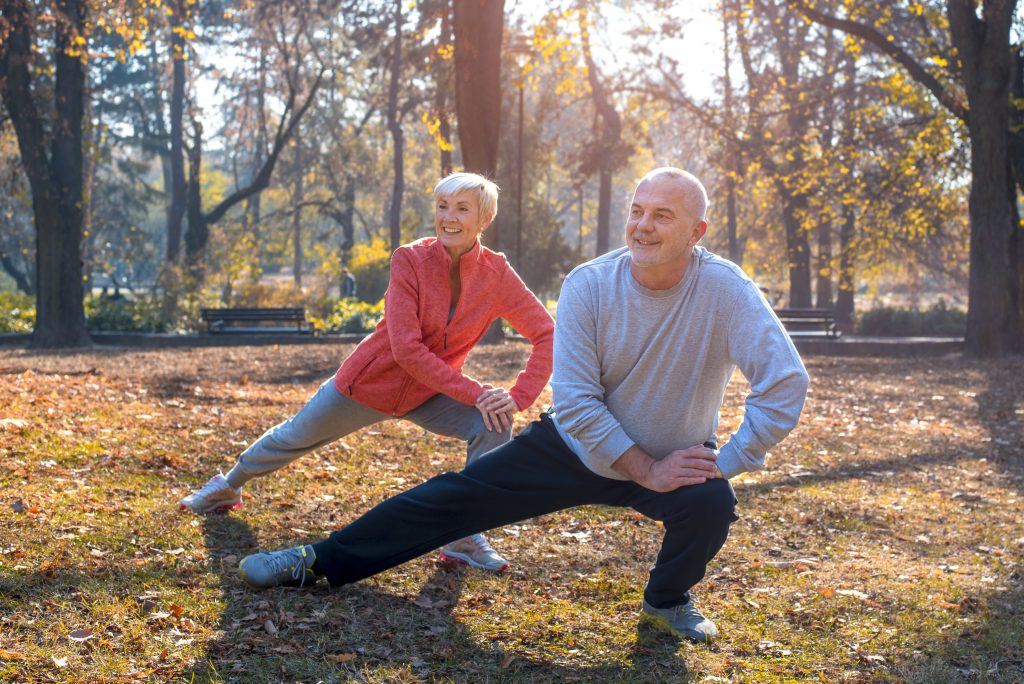
- Gentle hip-flexor stretches
- Seated or standing trunk movement
Mobility work should be comfortable and controlled. Forceful stretching is not required for improvement and may be inappropriate for certain conditions.
Why Individualization Is Essential
Age does not reveal everything about a person’s fitness. Two 75-year-olds may have completely different capabilities and goals.
An individualized program considers:
- Current strength
- Walking ability
- Balance
- Exercise experience
- Medical history
- Joint comfort
- Medications
- Previous falls
- Sensory limitations
- Personal interests
- Available equipment
- Training environment
- Desired activities
A highly active senior may need challenging resistance and athletic conditioning. A participant recovering from inactivity may need short sessions with significant support.
Neither program is more legitimate. Each is appropriate when it matches the individual.
How A Senior Fitness Program Should Progress
Progressive training gradually increases the challenge as the participant adapts.
Begin With A Realistic Starting Point
The first goal is to establish exercises the participant can complete with acceptable technique and confidence.
Starting too aggressively can cause excessive soreness, fatigue, or discouragement. Starting too easily and never progressing can also limit improvement.
A trainer should observe how the participant responds during and after each session.
Change One Variable At A Time
Exercise can become more challenging by changing:
- Resistance
- Repetitions
- Sets
- Duration
- Range of motion
- Speed
- Foot position
- Hand support
- Movement complexity
- Rest periods
Changing one or two variables at a time makes progress easier to track and reduces unnecessary confusion.
Allow For Recovery
Recovery can be influenced by sleep, nutrition, medication, stress, illness, and training experience. Some older adults recover quickly, while others need more time between challenging sessions.
Fatigue is not always obvious during the workout. Trainers should ask how the participant felt later that day and the following day.
Adjust For Fluctuations
Progress does not occur in a perfectly straight line. A participant may temporarily perform below their usual level because of poor sleep, travel, illness, pain, or emotional stress.
Modifying the session is a sensible response. It does not erase previous progress.
Who Can Benefit From Senior Fitness Training?
Senior fitness training can serve many populations.
Independent And Active Older Adults
Active seniors may want to preserve performance, prevent deconditioning, or prepare for travel and recreation. Their programs can be challenging and goal-oriented.
Beginners
People who have never exercised may benefit from instruction, structure, and gradual exposure to equipment and movement.
People With Balance Concerns
Individuals who feel unsteady may benefit from supported balance work and lower-body strengthening. A recent or unexplained change in balance should receive medical attention.
People Managing Stable Chronic Conditions
Exercise can often be adapted for conditions such as arthritis, diabetes, osteoporosis, or cardiovascular disease. The participant may need healthcare guidance about restrictions, intensity, or monitoring.
People Transitioning From Rehabilitation
After formal physical therapy or medical rehabilitation, some individuals use fitness training to continue building general strength and endurance. This transition should respect any remaining restrictions.
People With Mobility Limitations
Training can be adapted for people who use canes, walkers, wheelchairs, or other mobility aids. Options may include seated strength work, supported standing, accessible cardiovascular exercise, and transfer-related movements.
How Often Should Older Adults Train?
The CDC’s current recommendations include at least 150 minutes of moderate-intensity aerobic activity per week, or an equivalent amount of vigorous or combined activity, along with muscle-strengthening activity on at least two days and activities that improve balance.
These are population-level guidelines, not a requirement that every person begin at the full amount. People who cannot meet them should remain as active as their abilities and conditions allow.
A balanced week might include:
- Strength training two or three times
- Aerobic activity on several days
- Brief balance practice multiple times
- Mobility work as needed
- Lighter activity or recovery between demanding sessions
The exact schedule should reflect the person’s abilities, health, and recovery.
Safety Considerations
Senior fitness should encourage activity while respecting signs that require caution or medical attention.
When To Consult A Healthcare Professional
Medical guidance may be appropriate before starting or intensifying exercise if a person has:
- An unstable health condition
- Recent surgery
- Repeated or unexplained falls
- New dizziness or fainting
- Chest discomfort
- Severe shortness of breath
- A major change in walking
- New neurological symptoms
- Significant or worsening pain
- Uncertainty about exercise restrictions
The CDC advises people with chronic conditions to ask a healthcare professional whether their condition limits their ability to be active and to create a plan suited to their abilities.
Warning Signs During Exercise
Exercise should stop when a participant develops concerning symptoms such as:
- Chest pain or pressure
- Fainting
- Sudden confusion
- New one-sided weakness
- Severe or unusual shortness of breath
- Loss of coordination
- Sudden severe pain
- A rapid or irregular heartbeat accompanied by significant symptoms
Emergency warning signs require urgent medical care. A fitness facility and trainer should have a clear emergency plan.
Avoiding Unnecessary Risk During Balance Training
Balance exercises should be performed near stable support when needed. Floors should be dry and clear, and equipment should be secure.
Advanced drills involving closed eyes, unstable surfaces, rapid direction changes, or multiple simultaneous tasks should not be introduced until the participant is ready.
An exercise is not more effective merely because it looks difficult.
Choosing A Qualified Senior Fitness Trainer
A trainer working with older adults should understand exercise programming, balance progression, functional movement, communication, and professional boundaries.
Questions to ask include:
- What certifications do you hold?
- Do you have specialized senior fitness education?
- Are you trained in CPR and first aid?
- Have you worked with clients who have similar goals or limitations?
- How do you assess new participants?
- How do you modify exercises?
- How do you track progress?
- What symptoms cause you to stop a session?
- When do you refer someone to a healthcare professional?
- Do you carry professional liability insurance?
Qualities Of A Strong Trainer
A good trainer should:
- Listen carefully
- Treat older adults with respect
- Avoid assumptions based only on age
- Explain exercise choices
- Provide safe progressions
- Encourage appropriate effort
- Take pain and dizziness seriously
- Recognize professional limits
- Track meaningful improvements
- Adapt the program when circumstances change
Measuring Improvements In Balance, Strength, And Confidence
Progress can be measured in many ways.
Strength Improvements
Possible indicators include:
- More repetitions
- Greater resistance
- Easier chair transfers
- Better lifting technique
- Increased carrying capacity
- Improved stair use
- Less reliance on the arms
Balance Improvements
Possible indicators include:
- Longer unsupported standing
- Better control during turns
- Improved stepping
- Less hand support
- Greater stability on uneven surfaces
- Better ability to stop and change direction
Confidence Improvements
Possible indicators include:
- Willingness to try new exercises
- Reduced fear during familiar tasks
- Returning to social or recreational activities
- Walking in more environments
- Greater independence
- Less hesitation on stairs
- Improved belief in personal ability
Confidence is subjective, but it can still be discussed, rated, and tracked.
Common Mistakes To Avoid
Doing Only Light Cardio
Walking is valuable, but a complete program also includes strength and balance activities.
Never Increasing The Challenge
The body needs an appropriate reason to adapt. Exercises should progress when they become consistently easy.
Progressing Too Quickly
Rapid increases in resistance, duration, or complexity can lead to excessive fatigue or discomfort.
Using Age As The Only Measure
Calendar age does not determine functional capacity. Assessment and observation provide more useful information.
Ignoring Fear
Fear should not be dismissed as weakness. It should be addressed with safe practice, education, and achievable progressions.
Confusing Fitness Training With Medical Care
A trainer can support general strength and mobility but should not diagnose injuries, prescribe medication, or replace a physical therapist or physician.
How Family Members Can Offer Support
Family members can encourage activity without becoming controlling.
Helpful support may include:
- Providing transportation
- Joining walks
- Celebrating progress
- Helping create a safe home environment
- Asking what goals matter to the older adult
- Encouraging professional evaluation when needed
- Avoiding language that assumes incapability
The participant should remain involved in decisions about goals and activities. Personal ownership improves motivation.
Conclusion
Senior fitness training improves balance, strength, and confidence by giving older adults structured opportunities to challenge and practice important physical skills.
Strength training builds the muscular capacity needed for standing, walking, climbing, lifting, carrying, and recovering from a loss of balance. Balance exercises improve postural control, weight shifting, stepping, coordination, and stability during movement. Functional training connects these improvements to daily activities.
Confidence develops as participants complete manageable challenges and collect evidence of their progress. A person who stands from a chair more easily, walks farther, or uses less hand support has a concrete reason to trust their abilities. Greater confidence may then encourage more activity, which provides additional opportunities to build fitness.
The most effective program is individualized. It begins at an appropriate level, progresses gradually, accounts for health conditions, and focuses on meaningful goals. Senior fitness is not automatically easy, seated, or limited. It should provide the amount of challenge that is useful for the person participating.
Older adults with repeated falls, sudden balance changes, concerning symptoms, or unresolved medical issues should seek professional healthcare guidance. Fitness training can improve general capacity, but it is not a substitute for diagnosis or rehabilitation.
When performed consistently and appropriately, senior fitness training can support more than exercise performance. It can help people remain engaged in their homes, families, communities, and favorite activities with greater stability, capability, and confidence.
Frequently Asked Questions
1. Can Senior Fitness Training Really Improve Balance?
Yes. Appropriately designed training can develop weight shifting, posture control, stepping, coordination, and lower-body strength. Results depend on consistency, health status, and the suitability of the exercises.
2. How Does Strength Training Help Prevent Falls?
Strength supports the ability to control movement, step over obstacles, climb stairs, and respond to a loss of balance. Fall risk has many causes, so strengthening should usually be combined with balance practice and appropriate medical care.
3. How Often Should Seniors Practice Balance Exercises?
Balance activities can often be practiced several times per week. The ideal frequency and difficulty depend on the person’s ability and level of supervision.
4. Is Walking Enough To Improve Strength And Balance?
Walking supports cardiovascular health and may benefit leg endurance, but it does not fully replace progressive resistance or targeted balance training. A complete routine generally includes all three.
5. Can Older Adults Lift Heavy Weights?
Some older adults can use relatively heavy resistance safely, while others need lighter loads or medical guidance. The appropriate resistance depends on experience, technique, health, and joint tolerance—not age alone.
6. What Are The Best Balance Exercises For Seniors?
Useful options may include supported single-leg standing, heel-to-toe positions, weight shifts, directional stepping, controlled turns, and obstacle navigation. Exercises should be selected according to individual ability.
7. Can Chair Exercises Build Strength?
Yes. Seated resistance exercises and sit-to-stand practice can build strength. When safe, standing and weight-bearing movements may be added to prepare for daily activities.
8. How Does Exercise Improve Confidence?
Training creates repeated successful experiences. As movements become stronger and more controlled, participants have evidence that they can manage tasks that once felt difficult.
9. How Long Does It Take To Notice Improvement?
The timeline varies. Some people notice improved confidence or energy within several sessions, while measurable changes in strength or endurance may require more time and consistent training.
10. Is Senior Fitness Safe For Someone With Arthritis?
Exercise can often be adapted for arthritis using comfortable ranges, controlled resistance, low-impact activities, and appropriate recovery. Persistent or worsening symptoms should be discussed with a healthcare professional.
11. What If Someone Has Osteoporosis?
People with osteoporosis may need individualized guidance concerning resistance, impact, bending, twisting, and fall risk. Medical or clinical exercise advice may be appropriate.
12. Should Someone Exercise After A Fall?
A fall should not automatically lead to permanent inactivity, but the cause and any injuries may need evaluation. Repeated falls, dizziness, or sudden changes in balance require medical attention.
13. Is Personal Training Better Than A Group Class?
Personal training provides more individualized supervision. Group classes may offer affordability, motivation, and social connection. The best choice depends on the participant’s needs and the instructor’s ability to provide modifications.
14. Can Senior Fitness Be Done At Home?
Yes. Many exercises can be performed at home using stable chairs, resistance bands, light weights, or body weight. The space should be well lit, uncluttered, and free of tripping hazards.
15. What Should A Beginner Do First?
A beginner should identify meaningful goals, discuss relevant health concerns with a healthcare professional, and choose manageable activities. Short walking periods, basic strength exercises, and supported balance practice may be reasonable starting points when appropriate.
Stay Strong, Active, And Confident At Every Age
Ready to build strength, improve balance, and feel more confident in the way you move? Senior fitness training can help support better mobility, greater independence, and a more active lifestyle with exercises designed around your current abilities and goals. Whether you want to stay active, regain strength, reduce your risk of falls, or simply feel more comfortable with everyday movement, the right training plan can make a meaningful difference. Contact us today to learn more about personalized senior fitness training and take the next step toward moving with greater strength and confidence.