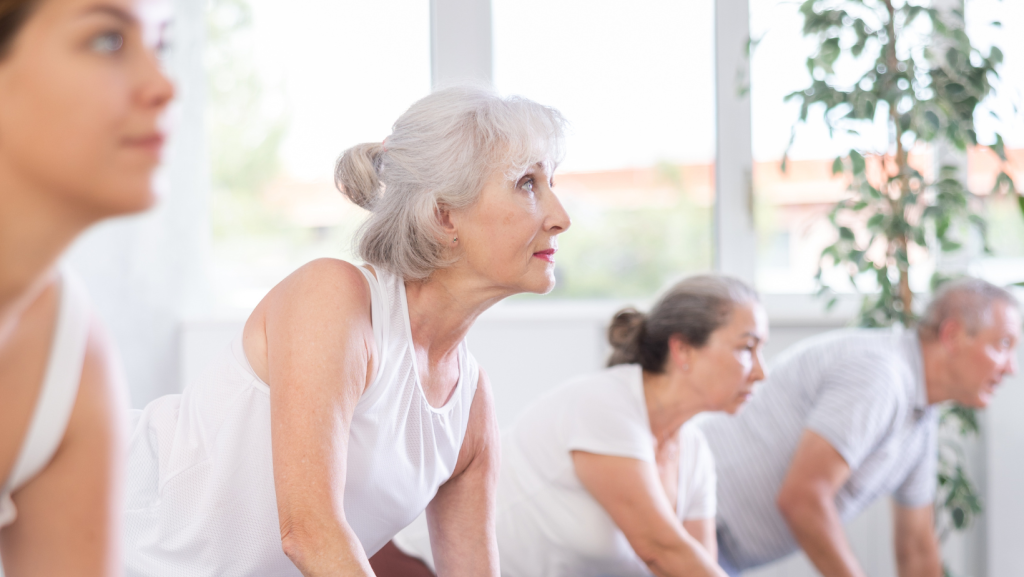

Healthy aging is often pictured as someone climbing a mountain, running a race, or looking decades younger than their age. Those images can be inspiring, but they leave out the everyday meaning of aging well. For many people, the important goals are being able to get up from a chair, shop for groceries, enjoy a walk with a friend, manage a health condition, or continue taking part in activities that give life meaning.
The World Health Organization describes healthy aging in terms of developing and maintaining the functional ability that supports well-being in older age. Functional ability depends on a person’s physical and mental capacities, the environment around them, and how those factors work together. There is no single picture of a healthy older adult. Someone living with a chronic condition or using a mobility aid can still pursue meaningful function, connection, and quality of life. World Health Organization (WHO)
Exercise is one way to support that goal. Regular movement can help preserve strength, endurance, balance, and the ability to do daily tasks. It can also support sleep and mental health and lower the risk of some chronic diseases. Exercise cannot stop time or guarantee that illness will never occur. Its value is practical: it helps many people keep doing more of what matters to them as they age. CDC
This article explains what healthy aging means, how different types of activity help, what current recommendations say, and how to begin safely at a level that fits your circumstances.
Key Takeaways
- Healthy aging centers on function, participation, and well-being rather than a particular appearance or the absence of every diagnosis.
- A well-rounded routine includes aerobic activity, muscle-strengthening, and balance practice; flexibility can also help with comfortable movement.
- U.S. guidance for adults 65 and older recommends at least 150 minutes of moderate aerobic activity or 75 minutes of vigorous activity per week, muscle-strengthening on at least two days, and balance activities.
- Some activities are better than none. A person who cannot meet the full target because of a health condition can still benefit from activity suited to their abilities.
- Strength and balance work support everyday tasks and can reduce fall risk, while aerobic activity supports heart and lung fitness.
- A sustainable routine begins with realistic steps, progresses gradually, and makes room for rest, medical advice, and changes in ability.
What Does Healthy Aging Really Mean?
Function Matters More Than An Age Stereotype
Healthy aging is not a contest to look or perform like a younger person. Consider two people of the same age: one may walk several miles, while another uses a walker and enjoys seated gardening, cooking, and time with family. Their abilities differ, but both can work toward goals that matter in their own lives. WHO emphasizes that older adults are diverse and that the environment plays a large role in what people can do. World Health Organization (WHO)
Function includes ordinary actions that can be easy to overlook: carrying laundry, reaching a shelf, climbing steps, standing long enough to prepare a meal, and getting to a social event. It also includes the mental and social resources needed to make choices and participate in community life. Healthy aging therefore involves more than a fitness program. Health care, safe surroundings, supportive relationships, nutrition, access, and personal goals all matter.
Chronic Conditions Do Not End The Conversation
Many people grow older while managing arthritis, heart disease, diabetes, osteoporosis, or another long-term condition. A diagnosis may change the safest type or amount of activity, but it does not automatically rule out movement. The CDC notes that adults with chronic conditions or disabilities can often be physically active and gain important health benefits. The plan should fit the person’s abilities and medical circumstances. CDC
This is why a useful question is not, “Am I healthy enough to exercise like someone else?” It is, “What kind of movement helps me function better, and what adaptations do I need?” A clinician or physical therapist can help answer that question when symptoms, balance problems, recent surgery, or complex conditions make the choice uncertain.
The Surroundings Affect What Is Possible
A person may want to walk but live near roads without safe crossings. Another may have access to a welcoming community center, a nearby park, or a building with elevators. Transportation, cost, weather, accessibility, and social support influence whether movement is realistic. These factors are part of healthy aging, not excuses to dismiss.
If outdoor walking is difficult, an indoor corridor, chair-based routine, accessible pool, or home exercise plan may be more practical. If isolation is a barrier, a group class or regular activity with a friend can support both movement and connection. The best exercise is one a person can do safely and consistently in the life they actually have.
How Does Exercise Support Physical Function?
Aerobic Activity Builds Endurance
Aerobic activity raises your heart rate and breathing for a sustained period. Brisk walking, cycling, swimming, dancing, or moving energetically during household tasks can all count, depending on your abilities. Over time, aerobic fitness can make errands, stairs, and recreational activities feel less demanding.
The intensity is relative to the individual. A pace that is moderate for one person may be vigorous for another. The CDC’s practical talk test says that during moderate activity, you can talk but generally cannot sing comfortably. You do not have to start with a long workout; shorter bouts can add up across a week. cdc.gov
Aerobic activity also contributes to cardiovascular health and chronic disease prevention. The purpose of a walk need not be a number on a watch. It might be having enough energy to visit a museum, keep up with a grandchild, or take a familiar route without stopping as often.
Strength Training Protects Useful Muscle
Muscle strength helps you rise from a chair, lift a bag, steady yourself when you stumble, and carry out countless small tasks. Age-related loss of muscle mass and strength can make these activities harder. Resistance training challenges muscles so they can maintain or improve their capacity. NIA highlights strength training’s role in addressing age-related muscle loss and supporting function. National Institute on Aging
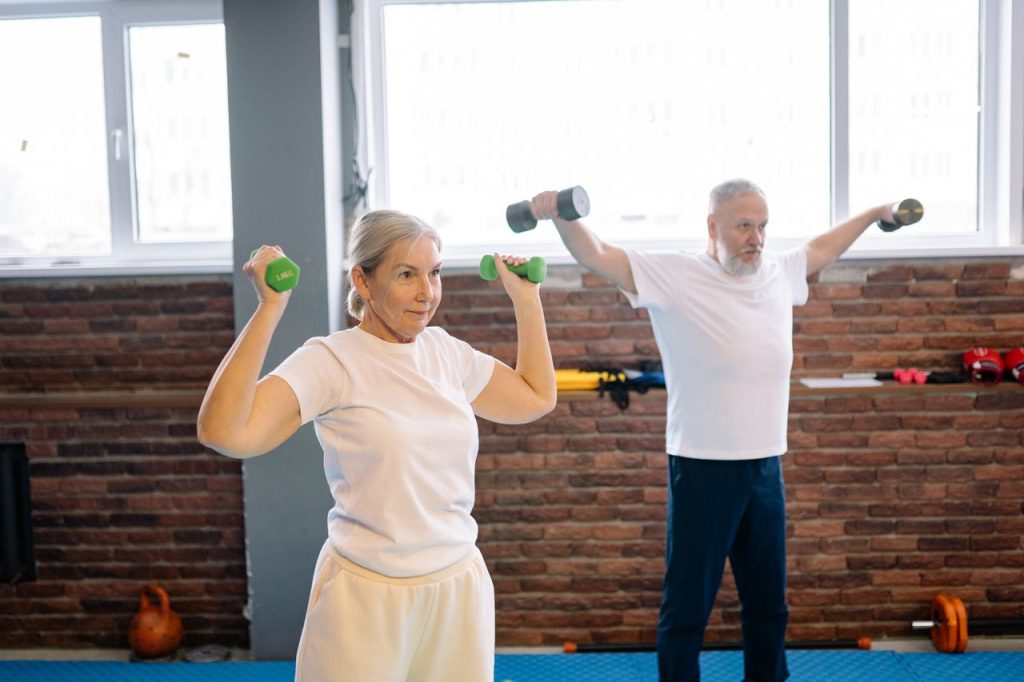
Strength work does not require a heavy barbell. Examples include standing up from a sturdy chair, using resistance bands, lifting manageable weights, or doing movements against body weight. The right starting level depends on your current ability. Good form and gradual progression matter more than copying an advanced workout.
Try to include the major muscle groups across the week rather than doing only one familiar exercise. Legs and hips are particularly relevant to walking and rising, while back, chest, shoulders, arms, and core muscles contribute to posture, carrying, and reaching. If a movement causes pain or you are unsure how to adapt it, seek guidance.
Balance Practice Supports Confidence And Safety
Balance involves more than standing on one leg. Vision, sensation, strength, attention, and the inner ear all contribute to staying upright. Balance practice helps you manage changes in position and unexpected shifts. Examples may include standing with feet closer together, shifting weight from side to side, or practicing a controlled step while holding a stable support.
Choose exercises appropriate to your fall risk. Someone who has recently fallen, feels unsteady, or relies on a mobility aid should not copy unsupported balance challenges from a video. A physical therapist or other qualified professional can help create a safer progression. The CDC recommends balanced activities as part of a weekly older-adult routine and notes that combining activity types improves function and reduces fall-related risk. CDC
Flexibility Helps You Move Comfortably
Gentle stretching can help maintain range of motion for tasks such as turning to look over your shoulder, reaching for a coat, or bending to put on shoes. Flexibility is a useful addition to aerobic, strength, and balance work, though stretching alone does not replace them.
Move within a comfortable range rather than forcing a joint. Breathing normally and avoiding a bouncing motion can make stretching easier to control. If you have a joint replacement, osteoporosis, an injury, or persistent pain, ask a professional which positions are appropriate. The goal is comfortable, useful movement, not achieving a dramatic pose.
How Does Activity Affect The Brain And Mood?
Movement Can Support Sleep And Emotional Well-Being
Physical activity has benefits beyond muscles and the heart. The CDC reports that activity can improve sleep quality and reduce the risk of depression. Many people also notice that a walk or class helps them feel more alert or gives structure to the day. Results differ, and exercise is not a substitute for needed mental health treatment. CDC
The social setting can add value. Walking with a neighbor, gardening with a group, or joining an accessible class may create a regular reason to connect with others. A person who prefers solitude can still benefit from independent activities. Choose a setting that supports your motivation rather than one that adds unnecessary pressure.
Brain Health Involves More Than A Single Activity
The CDC associates regular physical activity with a lower risk of developing dementia and with benefits for brain health. That is a population-level relationship, not a guarantee that an individual who exercises will never develop cognitive impairment. It is more accurate to view movement as one supportive habit among many aspects of health. CDC
An activity that asks you to coordinate movement, learn steps, or navigate a route may also be enjoyable and mentally engaging. However, no one must master a complicated dance to gain value. A simple, repeatable walking and strengthening routine is a meaningful place to start.
Exercise Can Reinforce Independence And Purpose
The psychological value of movement often lies in what it permits. Being able to walk to a favorite place, prepare a meal, play with a pet, or participate in a volunteer activity supports a sense of agency. Small improvements in endurance or strength can open doors that matter more than a fitness score.
Set goals in terms of participation: “I want to climb the steps to my friend’s porch,” or “I want to feel steadier when carrying groceries.” These goals can guide exercise selection and make progress visible even when a scale or mirror shows little change.
What Do The Physical Activity Guidelines Recommend?
Aerobic Activity Each Week
Current CDC guidance for adults 65 and older recommends at least 150 minutes of moderate-intensity aerobic activity per week, such as brisk walking, or 75 minutes of vigorous-intensity activity, or an equivalent combination. Thirty minutes on five days is one way to reach the moderate target. The minutes can be distributed in a way that fits your schedule and capacity. CDC
These are goals for substantial benefit, not a minimum threshold below which nothing counts. If you are currently inactive, five or ten minutes may be a useful start. Gradually adding time can be more sustainable than trying to meet the full recommendation at once.
Strength Work And Balance Activities
The same guidance recommends muscle-strengthening activity on at least two days per week and balance activities as part of a weekly routine. The types can overlap: some dancing, tai chi, gardening, or group classes involve more than one component. A balanced plan still checks whether each major need is being addressed. CDC
For example, walking regularly is valuable but may not provide enough challenge to maintain upper-body strength. A resistance routine helps fill that gap. Conversely, a person who lifts weights may still benefit from aerobic movement and balance practice.
When The Full Target Is Not Possible
Health conditions, disability, recovery, or limited energy can make the standard target impractical. In that case, an activity that fits your abilities is still worthwhile. The CDC advises people who cannot meet the recommended amount to be as active as they can and to avoid inactivity where possible. A clinician can help adapt the plan if your health condition affects safe participation. CDC
This guidance should not become a reason to push through serious symptoms. It is permission to find a workable form of activity. Ten minutes of comfortable movement, seated resistance exercise, or a tailored rehabilitation plan may be a meaningful achievement.
How Can Exercise Help Reduce Falls?
Build Strength And Balance Together
Falls can result from many interacting factors, including medication effects, vision changes, hazards at home, muscle weakness, and balance problems. Exercise addresses some of those factors, particularly strength and balance. Multicomponent routines can help people move more steadily and reduce fall-related injury risk. cdc.gov
Imagine stepping off a curb or turning quickly to answer someone. Leg strength helps you control the movement; balance helps you adjust your position. Practicing both gives the body more ways to respond. The goal is to build capacity in a controlled setting before you need it unexpectedly.
Make Practice Safer
Balance exercises should match your current steadiness. Use a sturdy counter or rail when recommended, keep the area free of clutter, and wear suitable footwear. If you feel dizzy, have frequent near-falls, or recently fell, ask for an assessment rather than increasing the difficulty on your own.
Exercise is one part of fall prevention. A health professional may also review medications, eyesight, footwear, and environmental hazards. If fear of falling has led you to stop moving, a supported plan can help you regain confidence without pretending that the fear is baseless.
Is It Safe To Exercise With A Chronic Condition?
Adapt The Activity To The Condition
A person with arthritis may prefer lower-impact movement and carefully paced strengthening. Someone with osteoporosis may need guidance about movements that are appropriate for bone health and those to avoid. A person with heart or lung disease may need a tailored intensity and a plan for monitoring symptoms. The answer is seldom a blanket “exercise” or “do not exercise.”
NIA notes that older adults with chronic conditions can benefit from activity and encourages discussion of condition-specific needs with a health care professional. A physical therapist may help translate medical guidance into movements you can do at home or in a gym. National Institute on Aging
Know When To Ask Before Changing Your Routine
If you have an unstable medical condition, a recent surgery, new symptoms, a history of falls, or questions about how a condition affects exertion, seek individualized advice before making a major increase. Ask what activities are suitable, what limits apply, and which symptoms should make you stop and seek care.
For many people without an existing injury or chronic condition who plan to increase activity gradually, a special medical visit may not be needed before starting gentle movement. NIA recommends discussing exercise with a doctor when chronic conditions or existing health issues may affect participation. National Institute on Aging
Listen To Warning Signs
Ordinary exertion can make your breathing faster, and your muscles feel challenged. Sudden chest pain, fainting, severe breathlessness, or a new severe symptom calls for stopping the activity and seeking prompt medical help. Do not try to “work through” a symptom that seems unusual or alarming. If you have a known condition, follow the action plan provided by your own clinician.
Mild muscle soreness after unfamiliar strengthening is different from sharp pain in a joint or a worsening injury. Reduce or modify a movement that hurts and ask for advice if symptoms persist. A sustainable plan should help you function better over time, not repeatedly leave you unable to carry out daily tasks.
How Do You Start If You Have Been Inactive?
Begin Below Your Maximum
The first week is about establishing a pattern. If a ten-minute walk feels comfortable, begin there instead of trying to complete an hour. If standing exercise is difficult, try a suitable seated routine. Choose an amount that leaves you willing and able to return to it.
You might start with a short walk three days a week, simple chair rises or band exercises on two days, and supported balance practice on several days. This is an illustrative starting pattern, not a prescription. Adapt it to your ability and any professional advice you have received.
Increase One Element At A Time
Progress can mean adding a few minutes, an extra day, a slightly more challenging resistance, or a new movement. Changing everything at once makes it harder to tell what is working and can increase discomfort. If your energy varies, plan for a lower-effort version rather than abandoning the routine entirely.
For example, a person might walk for ten minutes on three days for a couple of weeks, then add a few minutes to one or two walks. Once the habit feels steady, they can review strength and balance. There is no prize for reaching the guideline faster than your body can adapt.
Choose Activities You Can Repeat
Enjoyment matters because consistency matters. Some people like walking outdoors; others prefer music, water exercise, a class, or gardening. You may need an indoor option for bad weather and a shorter option for busy days. Keep the barrier to starting as low as possible.
It can help to connect movement to an existing routine: walk after breakfast, do a few chair rises before lunch, or practice a therapist-approved balance exercise while waiting for the kettle. Build in rest and recovery, especially after strength sessions. A routine that survives ordinary life is more useful than a perfect plan that lasts one week.
What Could A Balanced Week Look Like?
An Example For Someone Building Toward The Guidelines
A person who can safely walk at a moderate pace might spread aerobic activity over five days, with approximately 30 minutes on each day. Two nonconsecutive days could include resistance exercises for major muscle groups. Brief balance practice could be added several times during the week, with support as needed. Gentle stretching might follow a warm-up or activity session.
This example reaches the common aerobic target, but it is not the only pattern. Someone may divide activity into shorter sessions, use cycling instead of walking, or attend a class that combines several components. Vigorous activity is an option for people for whom it is appropriate, not a requirement.
An Example For Limited Mobility
A person with limited walking tolerance might begin with a few minutes of movement several times a day, seated aerobic activity, or an individually adapted program. Strength work may use bands or carefully chosen body movements. Balance practice might focus on safe transfers, standing with support, or exercises prescribed by a physical therapist.
The point is to preserve and build useful capacity at the level available now. Comparing this plan with someone else’s step count misses the purpose of healthy aging. A clinician can help set meaningful measures, such as easier transfers, less fatigue during errands, or improved steadiness.
Review The Routine As Life Changes
An exercise plan should change after an illness, a fall, a new diagnosis, or a significant change in strength or confidence. It can also grow when you find an activity you enjoy. Check whether the routine still supports your goals and whether any part has become too easy, too hard, or impractical.
If you stop for a while, start again at a manageable level. A break does not erase the value of previous activity. The next safe step matters more than the fact that you missed a week or a month.
Common Misunderstandings About Exercise And Aging
“I Am Too Old To Benefit”
Age alone does not make movement pointless. People can work on strength, balance, and endurance at many ages, although the plan should reflect their health and abilities. A small improvement in getting up from a chair or walking to the mailbox can have a large effect on daily life.
“Walking Is All I Need”
Walking is excellent for many people, but it may not adequately challenge all major muscle groups or address balance directly. Add suitable strengthening and balance exercises. Conversely, strength training without aerobic movement leaves another part of fitness less developed.
“Exercise Has To Be Strenuous To Count”
The guidelines include moderate activity, and smaller amounts can be a starting point. Physical activity also includes movement outside a formal workout. The challenge should be enough to serve your goal but appropriate to your body and situation. More strain is not automatically better.
“A Diagnosis Means I Must Stay Inactive”
Many people with chronic conditions can be active with adaptations. The right questions are what is safe, what benefits are realistic, and whether professional guidance is needed. Rest may be necessary during an acute illness or recovery, but permanent inactivity should not be assumed from a diagnosis alone.
Conclusion
Healthy aging means maintaining the ability to live in ways that matter to you, with support from your health, relationships, and environment. Exercise contributes by building endurance, preserving strength, improving balance, and supporting mental well-being. It is valuable at many levels of ability, from a structured weekly program to a carefully adapted first few minutes of movement.
A useful routine does not have to be extreme. Start with your current capacity, include different kinds of movement, progress gradually, and seek individualized advice when health concerns call for it. The aim is to make ordinary life more possible and enjoyable, one sustainable step at a time.
Frequently Asked Questions
1. What Is The Simplest Definition Of Healthy Aging?
Healthy aging is the process of maintaining the abilities and supports that let a person do things they value as they grow older. It involves physical and mental capacity, the environment, and opportunities for participation. It does not require looking young or having no medical conditions.
2. How Much Exercise Do Older Adults Need Each Week?
For adults 65 and older, CDC guidance recommends at least 150 minutes of moderate aerobic activity or 75 minutes of vigorous activity weekly, plus muscle-strengthening on at least two days and balance activities. The activity can be spread across the week. People who cannot meet the full recommendation should seek a safe amount suited to their abilities.
3. Does Walking Count As Exercise For Healthy Aging?
Yes. Walking can be an effective aerobic activity when it raises your breathing and heart rate to an appropriate level. Even easier walks can help someone begin moving more. Add strength and balance work to create a more complete routine.
4. Why Is Strength Training Important As People Age?
Strength helps with standing, climbing, lifting, carrying, and recovering from a stumble. Resistance exercise can help maintain or improve muscle function. It can be adapted using weights, bands, or body-weight movements and does not require lifting very heavy loads.
5. Can Exercise Prevent Falls?
Balance and strengthening exercises can reduce fall risk, especially as part of a broader routine. They cannot prevent every fall. Vision, medications, footwear, health conditions, and home hazards may also need attention. Someone with repeated falls or unsteadiness should seek an individualized assessment.
6. Is It Too Late To Start Exercising In Your Seventies Or Eighties?
It is generally possible to benefit from suitable physical activity later in life. The starting point and progression should match your health and current abilities. If you have significant symptoms, recent surgery, or a high fall risk, ask a clinician or physical therapist to help you plan safely.
7. What If I Have Arthritis, Osteoporosis, Or A Heart Condition?
Many people with these conditions can exercise, but the safest activities and intensity may differ. Ask your health care professional about condition-specific precautions, particularly before a major change. A tailored plan may include low-impact aerobic activity, appropriate strengthening, and balance work.
8. Does Stretching Replace Strength Or Aerobic Exercise?
No. Stretching may help with a comfortable range of motion, but it does not provide all the cardiovascular, muscular, and balance benefits of a varied program. Treat flexibility as an addition to the core types of activity rather than the entire routine.
9. What If I Cannot Do 30 Minutes At Once?
You can divide activity into shorter periods. Begin with a duration you can manage and build gradually. A few minutes done consistently can establish a habit and may be more useful than attempting a long session that leaves you exhausted or discouraged.
10. How Do I Know Whether An Exercise Routine Is Helping?
Look at meaningful changes over time: Can you walk farther or recover more easily? Is rising from a chair less difficult? Do you feel steadier during ordinary tasks? Are you able to participate in activities you value? Discuss persistent pain, concerning symptoms, or lack of progress with a qualified professional so the plan can be adjusted.
Support Healthy Aging With A Personal Trainer For Seniors At Fitness Ellipsis!
Healthy aging is about staying strong, mobile, confident, and independent as you get older. At Fitness Ellipsis, our Personal Trainer for Seniors program offers personalized one-on-one coaching designed to support your health, fitness level, abilities, and long-term goals. Each workout is tailored to help you maintain strength, improve balance, support mobility, and stay active in everyday life.
Whether you want to enjoy your favorite hobbies, travel with greater confidence, stay steady on your feet, or make daily activities easier, our experienced trainers can create a fitness plan that works for you. Sessions focus on safe, practical exercises that support strength, flexibility, coordination, endurance, and overall wellness while keeping your individual needs and comfort in mind.
Healthy aging doesn’t mean slowing down—it means staying capable and making the most of every stage of life. With personalized coaching from Fitness Ellipsis, you’ll have a dedicated trainer to help you stay consistent, work toward your goals, and maintain an active lifestyle at a comfortable pace. Get started today and discover how personal training for seniors can support your healthy aging journey and help you stay active, strong, and independent.